For Maidstone Harriers member Roger Hyland, running has been part of his life for four decades, from his first marathon in Maidstone in 1987 to a sub-2:40 London Marathon in 1991.
As Roger’s sight has deteriorated, he’s been one of the fortunate runners to have guide runners by his side. Their support helps him continue taking part in club runs, parkruns and organised races safely and confidently, while continuing to enjoy his lifelong passion for running.
Here, Roger shares his story and explains what that support means to him.
Roger’s Story
My Journey
By Roger Hyland
There are many levels of visual impairment. I lost the sight in my right eye in 2000 due to a detached retina which was not fixed despite operations. I have always been extremely short-sighted in my left eye but remained independent. In 2012, the remaining vision in my left eye worsened, thankfully temporarily stabilising with Lucentis injections in the eye. By 2018, I was still able to drive and DJ. However, in 2024, further injections were needed as the myopic degeneration increased, leaving me with limited central vision and diminishing peripheral vision. My consultant has advised that I am likely to be completely blind within five years.
Running is my life. My first marathon was Maidstone in 1987 and I completed four London Marathons, my best time in 1991, when I finished in 2 hours, 39 minutes and 53 seconds.
Living with a visual impairment is challenging and understanding the issues this creates is so important. For instance, sighted runners may be unaware that uneven surfaces and loose dogs become obstacles and trip hazards. By wearing the high-vis bibs, we hope they draw attention to and raise awareness among all runners so that they take extra care. My hope is that, as at Mote Park parkrun, other events will adopt a separate VI start, including the majors.
What parkrun and Being Guided Mean to Me
As my sight has deteriorated, I am now unable to take part in parkrun unsupported, so I am really grateful for the invaluable, inclusive initiative between Maidstone Harriers and Mote Park parkrun which enables me to take part again. A guide runner becomes my eyes, giving me the essential information I need to run safely.
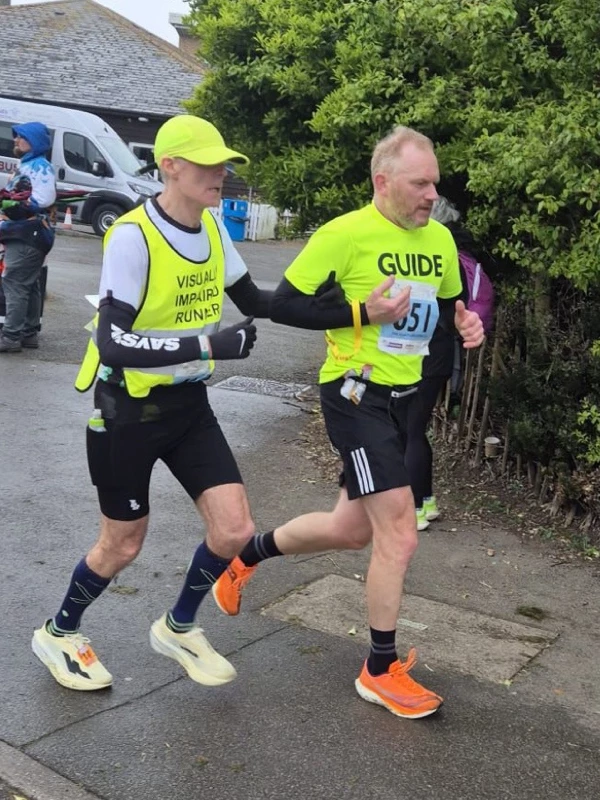
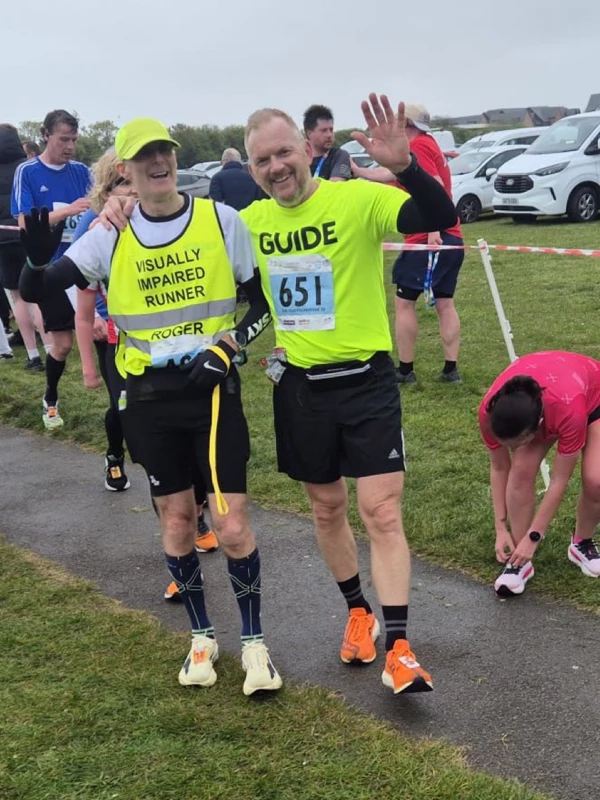
Thanks to the amazing volunteer guides, I have also completed two races using the tether. Being guided allows me to continue my passion for running and racing. Donating the bibs to contribute to the excellent work and VI awareness raising by Maidstone Harriers and Mote Park parkrun is my way of saying thank you.
Roger’s Running Achievements
As of 18 July 2026, Roger had completed 131 parkruns, beginning at Maidstone River Park in November 2015.
| Stat | Date | Venue | Time |
|---|---|---|---|
| First parkrun | 21 November 2015 | Maidstone River Park parkrun | 22:17 |
| Latest effort | 18 July 2026 | Mote Park parkrun | 25:24 |
| PB | 24 September 2016 | Maidstone River Park parkrun | 19:46 |
Roger’s commitment was also recognised at the 2017 Maidstone River Park parkrun annual awards, where he finished second in the men’s points competition with 2,904 points.
Best Overall Annual Achievements
Roger’s year-on-year results show several seasons of parkruns around the 20-minute mark, alongside age grades above 80%.
| Year | Best time | Best age grade |
|---|---|---|
| 2015 | 21:01 | 76.29% |
| 2016 | 19:46 | 81.87% |
| 2017 | 19:52 | 81.46% |
| 2018 | 20:01 | 82.26% |
| 2019 | 20:08 | 81.79% |
| 2022 | 22:58 | 74.38% |
| 2023 | 22:41 | 75.31% |
| 2024 | 22:52 | 75.44% |
| 2025 | 27:28 | 63.47% |
| 2026 | 24:28 | 72.07% |
Roger continues to train, take part in parkrun and compete in organised races with support from guide runners such as Tony Potter.
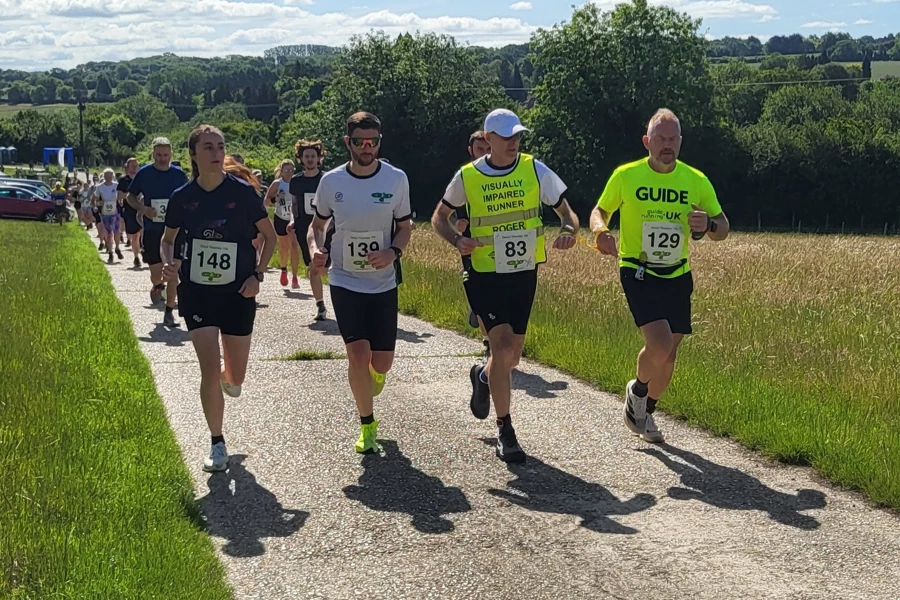
Some notable events from 2026 include the Folkestone 10 Miler, Mid Kent 5 Miler and Maidstone Harriers’ David Thornby 10k.
| Event | Date | Distance | Roger’s result |
|---|---|---|---|
| Folkestone 10 Miler | 3 April 2026 | 10 miles | 1:28:29 chip time |
| David Thornby 10k | 14 June 2026 | 10 kilometres | 54:12 chip time, 49th overall and 2nd M70+ |
| Mid Kent 5 Miler at Staplehurst | 12 July 2026 | 5 miles | 41:28 gun time and 2nd V70 |
These results reflect Roger’s continued commitment to running, supported by the guide runners who train and race alongside him.
Guide Running at Maidstone Harriers
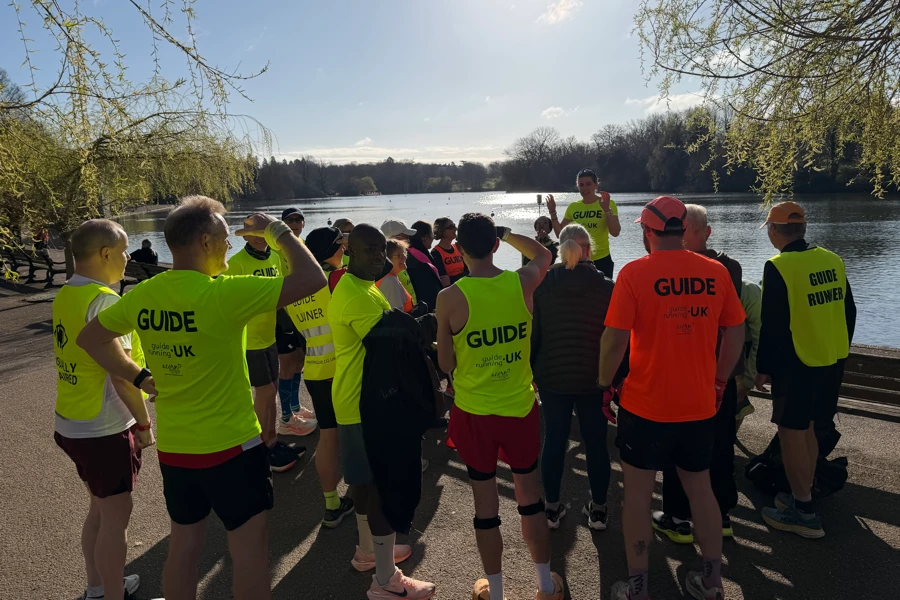
Guide running is built around communication and teamwork. A guide runs alongside a blind or partially sighted runner, sometimes using a short tether, and provides clear information about the route.
This includes verbally communicating upcoming turns, kerbs, surface changes, narrow sections, other runners and potential hazards. The support is adapted to each runner’s sight, pace and preferred way of communicating.
Maidstone Harriers provides guide-running support during Wednesday club runs, local parkruns and organised races. By November 2025, more than 12 club members had trained to support visually impaired runners, creating a dependable team across different paces and distances.
Guide running at Maidstone Harriers is a real team effort. Tony Potter, Nick Bailey, Anthony Bishop and Gemma Prowse are among the club members who support visually impaired runners during club runs, parkruns and organised races. Gemma has also helped organise guide-running events at Mote Park parkrun. Together with the club’s other trained guides, they help provide support across different sessions, events and running paces.
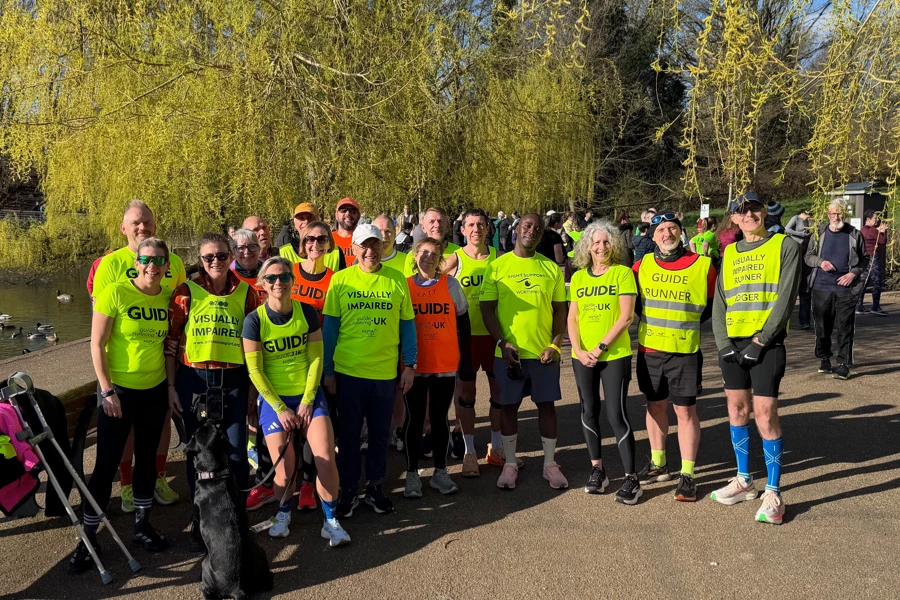
Roger has supported the wider guide-running community too. He donated high-vis bibs for visually impaired runners and their guides to use at Mote Park parkrun. The bibs help other runners, volunteers and members of the public recognise the pair and give them sufficient space.
At a dedicated Mote Park parkrun event, six visually impaired runners and 11 guides took part with support from Maidstone Harriers.
Barry and Kate also take part with support from club guides, and Kate has taken on the club’s spin classes in the past, too. You can learn more about the club’s support in Barry’s story about returning to running as a blind runner.
Become a Guide Runner with Maidstone Harriers
Guide running is a rewarding way to support another runner, share their achievements and contribute to the Maidstone Harriers community.
You do not need to be an elite athlete. Guides need to run comfortably at the required pace, communicate clearly, listen carefully and remain aware of the route around them.
The first step is to contact Maidstone Harriers and register your interest. The club can introduce you to experienced guides, explain how guided sessions work and help you find suitable opportunities to get involved.
The club can also direct you to the England Athletics Sight Loss Awareness and Guide Running Workshop. This two-hour workshop covers sight loss awareness, communication, safety and practical guiding skills.
Register Your Interest as a Guide Runner
Blind or partially sighted runners who would like to run with Maidstone Harriers can use the same contact form. Tell us about your running experience and the support you need, and a member of the club will help you get involved.
FAQs About Becoming a Guide Runner
How are guide runners matched with visually impaired runners?
A good match considers pace, distance, running experience and the visually impaired runner’s preferred way of communicating. Maidstone Harriers has trained guide runners across different paces, helping runners find suitable support for club sessions, parkruns and race events.
Do guide runners always use a tether?
Yes, guide runners use a short tether, with each runner holding one end so they can run comfortably side by side. The tether works alongside clear verbal communication, with the level of guidance adapted to the individual runner.
Can guide runners support visually impaired runners in organised races?
Yes, guide runners can support visually impaired runners at parkruns, road races and other organised events. Entry arrangements can vary, so runners should check the organiser’s requirements before entering.
Why do visually impaired runners and guides wear high-vis bibs?
High-vis bibs help other runners, volunteers and spectators recognise a visually impaired runner and their guide. This encourages people to give the pair sufficient space, particularly at busy starts, narrow sections and finish areas.
Can a guide runner receive a volunteer credit at parkrun?
Yes, a VI Guide is an official parkrun volunteer role. Guides should ask the event team to add them to the volunteer roster so their contribution can be recorded and recognised. You can read more about the role in the parkrun volunteer guidance.
What training is available for guide runners?
England Athletics offers a two-hour Sight Loss Awareness and Guide Running Workshop, covering communication, safety, different types of sight loss and practical guiding skills.
Maidstone Harriers can also introduce interested runners to experienced club guides and explain how to get involved – contact us about guide runner training.
Stay Connected
Join our newsletter. Get the latest updates, events and training tips.